Journal · Heritage & Etiquette

The Mayfair Standard: How Elite Matchmaking Has Evolved Over Centuries

From candlelit drawing rooms to members-only digital circles, the practice of introducing the right people to one another has always belonged to a select few.

Last updated: 11 August 2026

Where the Idea of a Curated Circle Began

Elite matchmaking history begins long before the internet. For centuries, introductions among the wealthy were arranged privately, inside a trusted circle, by someone who knew both parties personally. The salon hostess, the family friend, the club secretary — each performed the function a curated platform performs today. They screened. They vouched. They protected reputations before anything else.

What has changed is the machinery, not the principle. A luxury dating tradition built on discretion and personal recommendation still shapes how accomplished people meet, which is why a members-only sugar dating site feels far closer to a private club than to a public marketplace. The circle stays small deliberately. Entry is reviewed rather than open. An introduction carries the weight of someone's judgement behind it.

Read as a whole, this history is less a story about romance than about trust — how people with a great deal to lose have always managed the risk of meeting a stranger.

Three Eras

A Historical Timeline of Elite Introduction

Three distinct settings, one continuous idea: introductions that are reviewed, vouched for and kept private.

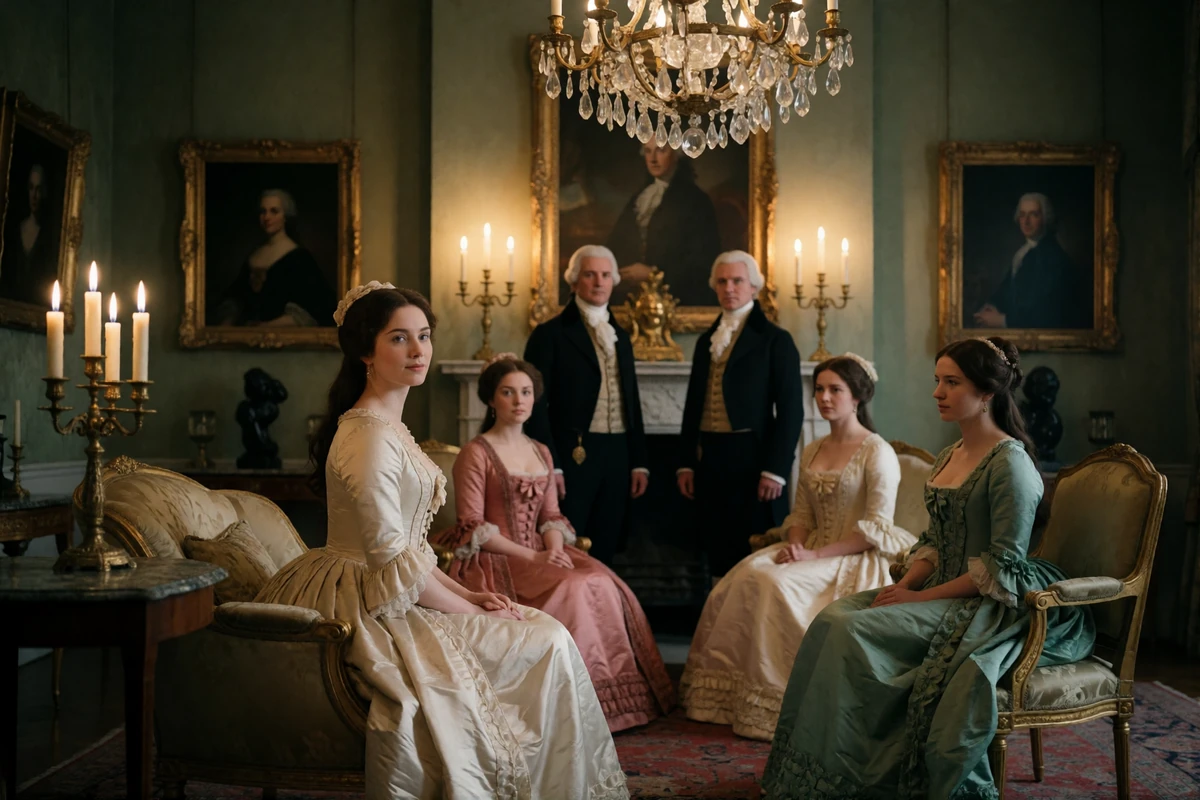
Elegantly dressed guests gathered in a candlelit eighteenth-century drawing room during a private salon evening

The Aristocratic Salon Era

In the eighteenth century, the drawing room was the filter. A hostess of standing decided who was invited, who was seated near whom, and which conversations were allowed to develop. Nobody arrived unannounced; an invitation was itself a verification, issued by a person whose own reputation depended on getting the guest list right.

The result was a closed, well-informed circle in which character and circumstance were known before any attachment formed. Introductions were slow, ceremonial and heavily supervised — but they were also remarkably safe, because everyone present had been accounted for by someone accountable.


Woman in a beaded gold dress seated at a table in a dimly lit private club of the early twentieth century

Private Society Circles of the Early Twentieth Century

The early twentieth century moved the same practice into subscription clubs, supper rooms and private members' bars. Formality relaxed; discretion did not. Membership lists replaced invitation cards, and a doorman or club secretary took over the hostess's role of deciding who belonged inside.

Here's what changed in substance: introductions became a little more voluntary and considerably more urban. People met outside the family orbit, yet still within a bounded room where reputations circulated quickly. Privacy was the club's product, and members paid for it precisely because their public lives could not absorb gossip.

Woman in an ivory blouse seated in a green velvet armchair in a modern private members lounge at dusk

The Arrival of Curated Digital Platforms

Open dating apps inverted the old model entirely: everyone could enter, and the filtering was left to the individual. Curated platforms answered by restoring the door. Applications are reviewed by a person, photographs are matched to the applicant, and expectations are stated in writing before an introduction is proposed.

That is the through-line from the salon to a modern sugar daddy dating site: someone still stands between the members and vouches for what is presented. The technology handles reach and scheduling. The judgement, as always, remains human.

Two Models

Tradition Versus Modernity

The salon and the curated platform solve the same problem with different tools. Each carries a genuine cost.

The Salon Era

What Tradition Did Well — and Where It Failed

Its strength was accountability. Every guest had been vouched for by a named person who lost standing if the judgement proved poor, so deception was expensive and rare. Context travelled with the introduction: family, occupation, temperament and intention were understood before a first conversation began.

Its failure was reach. The circle was fixed by birth, geography and season, which meant a suitable match simply might not exist inside it. Discretion also cut both ways — a closed room protects reputations, but it can just as easily protect the powerful from consequence, and it rarely gave either party much genuine choice.

Contemporary Platforms

What Curated Platforms Changed

Reach is the obvious gain. A member in one city can be introduced to a suitable member in another without either abandoning their schedule, and the pool is no longer limited to whoever happens to share a postcode or a surname.

The subtler change is that verification became a documented process rather than a private favour. Identity checks, manual profile review and stated expectations can be applied consistently to everyone, not selectively to acquaintances. What a platform cannot replicate is the old room's intimacy — which is why the serious ones keep membership small and keep a reviewer, rather than an algorithm, at the door.

The Standard

Why the Elite Approach Still Matters Today

A curated approach persists because the underlying risk never disappeared. Someone with a public reputation, a business to protect or children in the picture cannot treat an introduction as disposable. The bottom line is straightforward: scale creates options, but review creates safety, and only one of those can be added to a platform after the fact. Three inherited principles survive the move from the drawing room to the app, and they are the reasons an accomplished member still chooses a closed circle over an open feed.

A Vouched Network

An introduction means more when someone has examined both sides first. Manual review restores the hostess's old accountability: nothing reaches the circle until a person has confirmed it is what it claims to be.

Privacy as Infrastructure

The club door became technical: neutral billing descriptors, locked private albums and profiles kept out of public search. Our essay on legacy and discretion examines how that protection is maintained.

Deliberate Exclusivity

A small circle is not vanity; it is the mechanism. Fewer, better-matched candidates respect a demanding calendar and make it far likelier that a first meeting is worth the evening it occupies.

Join the Curated Circle

Membership is reviewed, not sold. Request access free and a reviewer will consider your application personally.